-
Are you looking for reliable sources to qualify as a personal trainer? In this article we will discuss a few topics that is commonly asked on how you can get started working as a personal trainer, & what are the steps to being a recognised trainer in the gym to work with clients, safely.
-
Soft Tissue Therapy tool assisted
The goal of soft tissue techniques is to control pain and improve performance by controlling or alleviating symptoms. There are many kinds of modalities that are used for this goal. Although each one may produce different results, no one modality can produce the expected results when properly used and performed by a trained professional. Physical therapist, Chiropractors and other healthcare providers are using IASTM successfully in their practise for performance and neuromuscular pain, and get to be the "to go to guy", just by adding IASTM into the current repertoire of skills they already possess.
Beware of courses that have exploited another organisation's intellectual properties & stealing the course as their own as teaching materials are so vast, personal, and specialised, you want to be with a course that constantly strives and evolves towards the most current development in the science world. Once again, check online carefully before enrolling yourself into any program. A copied tool / course can be found here
Humans are made up of connective tissues(fascia). The soft tissues play a major role in maintaining the flexibility and alignment of the human body. They help our bodies to move and respond quickly to commands such as running, walking, jumping, rotating, & so on. The ability to perform exercises without pain is one of the advantages of soft tissue manipulation.More of the highly sought after benefits are increased range of motion, increased joint stability, & reduced inflammation with movement time. These benefits have been shown to be effective from both anecdotal & studies that have been done, but often, patients can experience some of these benefits even if they have some kind of limitation, restrictions, & soreness. However, the real benefits starts after the first visit, when the tissues are being induced to go through its healing process through micro trauma via the qualified provider. We give you an example on where the need for an experienced, well-trained professional is apparent below.
An experienced physician refers a patient with back pain to an instrument-assisted soft tissue specialist. Upon the initial evaluation and instruction, the physician goes over and reinforces the instruction over the next several visits with the IASTM provider. After several visits to the IASTM specialist, the back specialist does her part to set up and execute the individualized rehabilitation plan based on the client's limitations. Over time, the pain diminishes or disappears entirely.
The client will then be advised to modify his lifestyle to achieve maximum results. For example, some people cannot run, lift heavy objects, bend, or twist at will, etc. An experienced back specialist can help tailor a program that fits the client's specific limitations.
Benefits of care are obvious, but there are many limitations that can limit the effectiveness of any treatment. One of the reasons soft-tissue therapy is so effective is that it is completely pain free. Yet, problems may arise at any time.
The bottom line is how to find the best facility that provides IASTM services with qualified professional(S). The beginning training of any professional can be achieved at a cost of hundreds of dollars, but if a professionally trained professional is used, the costs can be significantly less. These professionals can provide instruction and specialize in the soft tissue techniques used to gain benefits. Their track record for results is clear.
After the program is completed, the client can review the program and ask questions about the possible disadvantages of the program. All the advantages of education must be weighed against any potential disadvantage in the form of possible limitations or restrictions.
Prior to going into the IASTM / course program, the knowledge base of the facilitator must be examined. Knowledge of limitations, their skill level, abilities, course programmes's limitations, and what current outcome conditions for graduates of the course, should all be reviewed. Training programs are generally quite similar, but not always. This is why the training must be reviewed prior to enrolment of any programme, otherwise you will be paying for a few courses for the same topic to just understand the principles and applications of it, which is not what you want to do.
The role of professional expertise is important in the learning process. Programmes from different organisation vary from basic, intermediate to advanced clinical application(s), & the effectiveness of the entire program depends on the skills and knowledge of the trainer. There are several advantages and disadvantages to choosing a specialised training program. The advantages are clearly demonstrated by the specialised training center, which provide education and instruction, and the benefits are apparent by the client's progress, but the advantages of the clients own skills and knowledge is also apparent upon what they are able to practise & to which degrees of application(s).
The flexibility of the program allows it to adapt to the needs of the client, and the wide variety of activities to be learned, the wide range of input of the client, and the variety of soft tissue modalities, provide benefits of this type of training. However, some of the disadvantages to a specialised training center are a lack of direct supervision and a decreased support network in the field. This may eliminate the type of feedback from the client.
Whether you choose an advanced soft tissue provided by Integrated Training Institute or a general IASTM course, to looking to find the best training institute depends on your financial situation and personal preferences. The options are available to anyone who wants to improve their personal and professional clinical outcomes. Regardless of the program chosen, it is important to recognise the advantages and disadvantages. Find out more on how you can get on the best IASTM Certification training program for health providers & fitness professionals, which may include:
- Physiotherapists
- Chiropractors
- Osteopaths
- Personal Trainers
- Strength & Conditioning Coach
- Rehabilitation specialists
- Podiatrist
"Follow us on social media to keep up with us on latest updates on courses" -
How legit Blood Flow Restriction?
Training with Blood Flow Restriction also know as occlusion, has gotten both clinicians and strength enthusiasts all over the globe, with everyone saying it work for lesser effort. We dive into this subject and clear out some myths about BFR and the application mechanics that makes it legit or all hyped up by a new tool in the industry.What is blood flow restriction(BFR) training?
With claims such as below, you can see how and why it's gaining traction, let's start asking question, read on. -
If you are like many people who is constantly looking to upgrade, learn more, & increase your perspective on the topic of IASTM, we have compiled the best of IASTM Courses out there & which to avoid as it can be quite a costly mistake if it's not the course you are looking forward to learn from.
Best IASTM course
-
If you are looking to learn about cupping therapy, it's basic mechanics on the body from both science & eastern medicine, this will be your best choice.
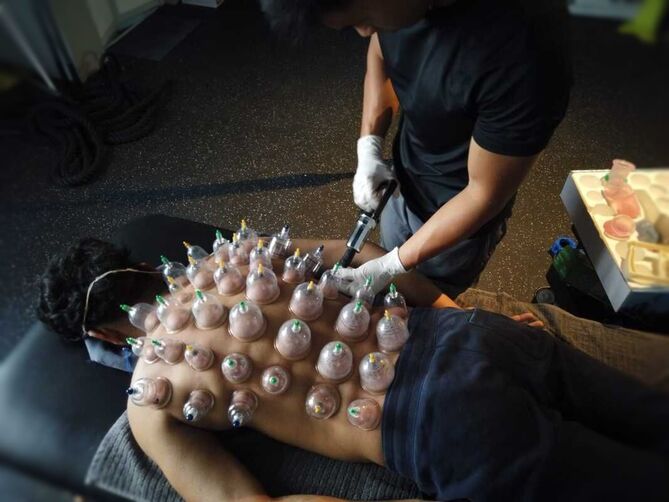
What exactly is cupping therapy?
-
Sports and Exercise related injury
As the era of sporting and leisure activities increases by the year, more and more people are getting injured due to faulty bio-mechanical movement(s) patterning, which is causing a steep rise in both the healthcare system costing millions of dollars and the therapy side of things.What can Sports Medicine do?
Sporting injuries happens due to many factors, of which can be:- Ability of distributing stress
- Faulty mechanics
- Repetitive strained movement
- Bad movement execution
- Low awareness of body
- Poor range of motion
- Joints are immobile
- High loading with high frequency
Of which can lead to many musculoskeletal pain where in some cases, surgery seems to be the best of options to fully stay away from pain. Surgery is not always advised as the body still allows itself to heal in many various ways even specialists are amazed at individuals who go against what is being advised to make a full recovery back into their normal life. Sports medicine is an approach to preventing injuries, management and recovery using simplex to complex programming in the form of resistance training, correcting faulty movement(s) to restore your neuromuscular efficiency of firing. In some cases of soft tissue's(muscle, tendon, ligaments etc) attention, the sports medicine graduate can also apply manual therapy into the session(s) allowing you to fully maximise the potential of your programme.Who can benefit from sports medicine?
If you value correct movement execution to prevent or manage any sort of injury which may have arisen from compensational posture, injuries or increase performance, then you would be having to search for a registered sports medicine therapist. It's 2020, and you don't have to be a national level athlete to be with a sports medicine therapist or engage one, as mentioned above, we are seeing an increase in injuries and demands for sports medicine has quadruple, and there's not enough sports medicine therapists! So if you are in the golden age group, young athlete, weekend warrior or you belong to a recreational sporting club, whatever your background is, you can benefit from a session with a registered sports medicine therapist.Is a sports medicine therapist the same as a physiotherapist?
They are similar but in terms of job scope, they hold two different scope of practise. A physiotherapist is fully licensed to work independently without the need of a referral from medical physicians to treat other related health conditions, whereby, a registered sports medicine therapist would still need a referral and release letter from a medical physician to work with. RSMT(reg sports med therapist) are fully qualified to engage in exercise prescription, management and treatment of sports related injuries and soft tissue manipulations. In some cases, they go through additional qualification / certification studies on top of their current studies to have extra training to manipulating the joints. A physiotherapist as well is regulated, but a RSMT isn't regulated, yet.A physiotherapist will not be trained in exercise, biomechanics, kinesiology as much as a sports medicine graduate being an RSMT.
Join the Sports Medicine Certificate course
Be the first ones to pioneer yourself & start practising as a registered sports medicine therapist. This course is suitable for those who are keen in sports medicine. A hybrid program of 6 months online course, & a 6 months live practicums in various placements. You now can study from anywhere, UK, Malaysia, Turkey, UAE, USA, Singapore, , India, Philippines etc, for more info click on the link below. -
-
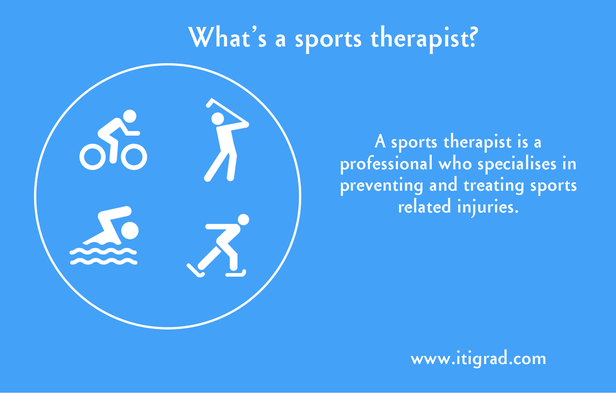
Sports Medicine
Sports medicine is vital to the healthcare system in preventing, managing and treatment of sports related injury, however, is not only specific to athletes but also to everyone. Sports medicine's approach to care is wide and diverse but more towards movements and soft tissue work simultaneously to bring you the best of your abilities. Sports medicine has seen an increase in demands lately as more and more people are getting injured due to faulty mechanics and wrong execution of movements through either leisurely or competitive sporting activities. There are a few offerings from organisations to allow individuals who are interested to enter the sports medicine world to undergo extra training / speciality. Most of the programme out there are for qualified physicians, physiotherapists, chiropractors and the likes, with having to have at least a bachelors or a masters degree depending on the individual school(s)/ organisation(s) requirements prior to undertaking the studies. However there is diploma and certificate course studies offered by other institutions which again requires a pre-requirement(s) prior to undertaking sports medicine studies. The reason for this is because most of the programme aims to include intermediate to advanced anatomy/ physiology related subjects and within a period of time to graduate as a specialist in sports medicine, thus the pre-requirement(s). -
What is Sports Medicine?
Sports medicine is a discipline, which is a sub-branch of medicine that involves the treatment and prevention of injuries related to sports and exercise. The discipline of sports medicine encourages education through prescription of exercise and movements and may use it to have an early intervention to lifestyle induced disease such as diabetes. While sports medicine was initially focused on elite level athletes for preventing and treatment of their injuries, it also plays an important role in chronic disease prevention and management, and in caring for the elderly who are prone to musculoskeletal injuries. Besides the obvious benefits of exercise, it helps to improve social functioning, well-being, have a healthier heart, be pain free movements, and decreasing inflammation in the body.Sports Medicine Physician's education- A 4 year bachelor's degree (including pre-medical courses)
- 1-3 years residency for specialisation(sports med)
In Singapore, doctors are trained for a minimum of 5 additional years before they become specialists in the field. -
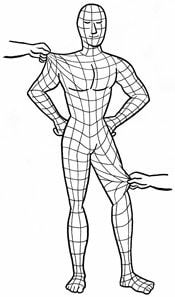
Scar Tissue and pain related symptoms are often overlooked in pain throughout our body. If you have a scar, read on to know more on how it may be affecting you.For some, scar(s) bears a reminder of the trauma to achieve it while some just think it's unsightly or aesthetically unpleasing to the eyes but whatever the reason is, ridding of a scar can be costly as they go under the cosmetic surgery category. So here, we will help you to do a DIY thus affordable for anyone who's willing to give it a try to self treat your scar. Releasing a scar can as well release any kept emotions or trauma within it.First let's talk about the most recent developments in the research field of the connective tissue commonly known as fascia. The fascial networks under our skin are thorough enough that whatever we do with our body will be reflected both inside out and vice versa. Think about how our fascia is literally under the skin right down to the bones, covering each and every organ and our "insides" (Pic 1.1). Our tissues need a bit of tough love to keep them having optimal elasticity, pliability, the flow of interstitial fluids which is essential for a healthy and pain-free body! It also helps us recover from our workouts faster, helps us avoid pain, repetitive motion injuries and all the things that give us pain in our adulthood lifespan. Now with the picture below (Pic1.1), you can have an idea if you cut the fabric you would have to sew it back and the fabric gets shorter and starts pulling places beyond the sewn area. Now without realising this and going back into life and doing our sports or living a sedentary lifestyle, we are creating more fibrotic tissue which is a build-up of tissue to hold the integrity of the affected area. Months pass by and now you have created a strain of patterns which may be interpreted as tightness of the traps, lower back, shoulder dull pain and aches for example. By this time you would have changed your body's mechanics due to sub-conscious shifting of your body daily for the past weeks that have become months and soon enough chronic pain is manifested into something that would be bothering you or might even be something that is affecting your quality of life. Now that pain will manifest into you being easily agitated or feeling tired and having a lack of energy...things that we don't actually think is associated with our scar(s)!Scars are never alike and the depth of it is hard to tell, just like the iceberg concept (Pic 2). But you can be sure the tissues from the area of the scar is affected and has more fibrotic tissues around it which may be pulling or impinging nerves and causing tissue hypoxia in muscles, which again depends on the types of scar and depth of the healed scar tissues.