
Breathing retraining exercises teach a client to breathe through the nose, more quietly & more slowly, with the tongue, soft palate & throat muscles doing their job. For a client who snores or mouth-breathes, that usually means five things coached in order: nasal breathing at rest, light (reduced) breathing, slow breathing, a gentle nose-clearing breath hold, and mouth & throat (oropharyngeal) exercises, then nasal breathing during training. But first you screen: anyone who might have obstructive sleep apnoea goes to a doctor before you coach a single breath hold.
This guide is written for personal trainers, yoga teachers, Pilates instructors & therapists whose clients want to stop snoring, who keep hearing "my wife says I snore" or watch clients gasp through an open mouth in every warm-up. It covers what breathing retraining is, how to screen & when to refer, the exercises with cues, regressions & progressions, a 4-week session plan, how to measure progress honestly, the language that keeps you within scope, & the mistakes we see most.
By ITI (Integrated Training Institute). We've trained fitness professionals & therapists since 2010. Practitioner notes from our founder Jab, creator of BreathEra breathwork, Advanced Oxygen Advantage instructor & sports medicine trainer, who teaches these breathing retraining exercises in classes & on our courses. Last updated 26 November 2026.
Key takeaways for coaches
- Breathing retraining is skill training for everyday breathing, not a medical treatment. It may help mild snoring & mouth breathing; it doesn't treat sleep apnoea on its own.
- Screen first. Loud snoring with gasping, observed pauses, daytime sleepiness or high blood pressure means refer to a GP or sleep clinic.
- The best research supports mouth & throat (oropharyngeal) exercises for snoring; nasal & light breathing build the habit that keeps the mouth closed.
- Coach little & often: 10-15 minutes a day at home, checked in each session, for at least 4 weeks.
- Measure trends (breath-hold comfort, sleep diary, partner report), never diagnoses.
What breathing retraining is (and what it isn't)
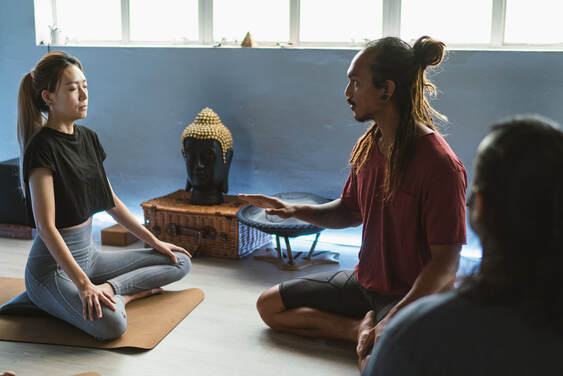
Breathing retraining means changing how someone breathes all day, at rest, in training & in sleep, through regular practice of simple breathing exercises. The goal is a pattern that is nasal, quiet, low in the ribcage & matched to what the body needs. It borrows from several established breathing techniques: Buteyko's reduced breathing, the Oxygen Advantage method of Patrick McKeown (which our founder teaches as an Advanced instructor), slow breathing & myofunctional (mouth & tongue) therapy.
It isn't the same as every kind of breathwork. Modern breathwork covers a huge range, from calming slow breathing to deliberate over-breathing.
Breathing retraining vs other breathwork techniques, from Buteyko to shamanic breathwork
Breathwork techniques such as holotropic, conscious connected or shamanic breathwork use fast, deep breathing to create strong emotional or altered states, often in long breathwork sessions. They have their place in personal growth & self discovery for some people, but they're the opposite of what a snoring, mouth-breathing client needs before bed. Breathing retraining works the other way: less air, more nose, more calm. If a client tells you breathwork "made my snoring better", ask which kind; the answer matters.
Why snoring & mouth breathing matter to your clients' training
You may see a client two or three times a week, more often than their doctor sees them in a year. That puts you in a good position to notice the pattern: a mouth that hangs open between sets, upper-chest breathing on easy walks, a client who says they wake up with a dry mouth, feel tired by 3pm or that their partner has moved to the spare room.
Poor sleep affects recovery, energy levels, mood, mental health, appetite & how well clients stick to a programme. And the route of breathing during sleep matters mechanically. In a crossover study in healthy adults, upper airway resistance during sleep was much higher with mouth breathing than with nose breathing, and obstructive breathing events were far more common. When the mouth opens, the lower jaw & tongue drop back & the soft tissues of the throat have less room. That's the link coaches can work on: make the nose the default, & train the muscles that hold the airway open.
Screening: when to coach & when to refer
Before you teach any breathing retraining exercises, ask a few questions. You're not diagnosing; you're deciding whether this is your job or a doctor's.
Step 1: Ask about sleep apnoea risk
Clinicians often use the STOP-Bang questionnaire, first published in Anesthesiology in 2008, to screen for obstructive sleep apnoea. Its items make a sensible conversation guide for coaches: loud Snoring, Tiredness in the day, Observed pauses in breathing, high blood Pressure, a high BMI, Age over 50, a large Neck size & male Gender. Don't score it or tell a client their "risk". If loud snoring comes with observed pauses, gasping, daytime sleepiness or high blood pressure, refer.
Step 2: Check the nose
Clients who get the most benefit from breathing retraining are usually mouth breathers with simple snoring & a clear nose, so check the nose next. Ask the client to close their mouth & breathe through their nose for a minute while sitting, then to close one nostril at a time. If one side is always blocked, if they can't manage a minute of quiet nasal breathing, or they report constant nasal congestion, refer to a GP or ENT. A deviated septum, polyps or untreated allergic rhinitis won't change with exercises.
Step 3: Check who shouldn't do breath holds
Leave out breath holds & strong air hunger for clients who are pregnant, have uncontrolled high blood pressure, heart disease, epilepsy, panic disorder, recent surgery or any serious medical condition, unless their doctor has cleared them. Nasal & slow breathing are usually still fine.
Step 4: Children & mouth tape
Snoring in children needs a doctor or a dentist. Don't recommend mouth tape for children, or for adults with a blocked nose or suspected sleep apnoea.
| What you hear | What it may mean | Your action |
|---|---|---|
| Snores on their back, after a drink; no gasping, sleeps well | Likely simple or mild snoring | Coach breathing retraining & habits; suggest a GP check if it doesn't settle |
| Partner sees pauses, gasping or choking | Possible obstructive sleep apnoea | Refer to a GP or sleep clinic first; coach only after clearance |
| Sleepy all day, high blood pressure, morning headaches | Possible sleep apnoea or another medical condition | Refer to a GP |
| Can't breathe through one side of the nose | Nasal obstruction | Refer to a GP or ENT; no mouth tape |
| Already diagnosed & using CPAP | Under medical care | Coach alongside it if their doctor agrees; never suggest stopping CPAP |
Scope of practice: what to say to clients
The words you use protect both of you. A few lines that work:
- Instead of "this will cure your snoring", say "these breathing exercises may help reduce snoring for some people. Let's practise them for four weeks & see what changes."
- Instead of "you have sleep apnoea", say "what you're describing is something a doctor should check. I'd like you to see your GP before we add breath holds."
- Instead of "you don't need your CPAP", say "keep following your doctor's plan; we'll work on breathing alongside it."
- Write it down. Note your screening questions, the referral & the client's answer in their file.
The breathing retraining exercises to coach, from nasal breathing to mouth exercises
Teach these in order. Each has a cue that works for most clients, a regression & a progression. Keep the client seated & relaxed for the first four.
1. Nasal breathing at rest with tongue posture
How: mouth closed, teeth slightly apart, whole tongue resting on the roof of the mouth. Quiet breaths in & out through the nose for 3-5 minutes.
Cues: "lips together, teeth apart, tongue up", "breathe so quietly I can't hear you", "let the belly & lower ribs move, not the shoulders". Regress: 1 minute, hand on belly for feedback. Progress: keep the mouth closed while walking, then in warm-ups.
2. Light breathing (reduced breathing)
How: from nasal breathing, gradually make each breath smaller & softer until the client feels a light, tolerable air hunger. Hold that for 3-4 minutes. This is the core exercise of Buteyko-style & Oxygen Advantage practice.
Cues: "breathe a little less than you want to", "air hunger about 3 out of 10, never a struggle", "if you need a big breath, take a normal one & start again". Regress: just slow the exhale. Progress: light breathing while walking. Watch for the opposite of what you want: clients who "breathe less" by holding their breath & then gasping. That's straining, & it's a common mistake.
3. Slow breathing to promote relaxation
How: nasal breathing at about 5-6 breaths a minute, for example in 4, out 6, for 5 minutes. A systematic review of slow breathing linked it to calmer nervous system activity & relaxation. It's a good wind-down before bed & a way to reduce stress after a hard session.
Cues: "slow & low", "soft belly", "longer out than in". Regress: in 3, out 4. Progress: lying on the side in bed, the position clients should sleep in. Avoid the "take a big deep breath" cue: deep breaths through the mouth are the habit we're trying to change, and a few slow deep breathing cycles at the start are enough.
4. Nose-clearing breath hold (screened clients only)
How: after a small, quiet exhale, pinch the nose & hold while gently nodding the head or walking, until a moderate urge to breathe. Release & breathe in calmly through the nose. Rest 30-60 seconds; repeat 5 times.
Cues: "moderate, not maximum", "first breath after the hold should be calm & through the nose". Regress: shorter holds, seated. Progress: a few more steps while walking. Clients often find a blocked nose eases for a while; it's useful before bed when nasal congestion makes mouth taping or nose breathing hard.
5. Mouth exercises & throat exercises (oropharyngeal exercises)
These aim to improve muscle tone in the tongue, soft palate & throat, and they have the strongest scientific evidence for snoring. In a randomised controlled trial in Chest (2015), 39 adults who snored did daily oropharyngeal exercises or a control routine (nasal strips plus breathing exercises) for three months; objectively measured snoring fell in the exercise group only. Earlier, a 2009 trial in people with moderate sleep apnoea found improvements in snoring & sleep measures, and a 2015 meta-analysis found myofunctional therapy improved snoring & sleepiness in adults. The studies are small, so present this as "may help", & for anyone with sleep apnoea, as an add-on to medical care. The mouth exercises & throat exercises we coach, based on those protocols:
- Tongue push up & slide: tip of the tongue on the palate behind the top teeth, slide it backward. 20 reps.
- Tongue suction: suck the whole tongue flat against the roof of the mouth, hold 2 seconds. 20 reps.
- Tongue push down: tip touching the lower front teeth, push the back of the tongue down (the tongue backward & down movement). 20 reps.
- Soft palate vowel: say "ah" in short bursts, lifting the soft palate & uvula. 20 reps, then hold the "ah" for 5 seconds.
- Cheek outward press: a clean finger inside the cheek, press the cheek outward against it. 10 per side.
- Alternate chewing & swallowing: chew on both sides in turn & swallow with the tongue on the palate, keeping the mouth closed.
Cues: "slow & precise, not fast". Regress: 10 reps each. Progress: two to three rounds a day (the trials used daily practice for about three months). Clients can do a round in 8-10 minutes. Interestingly, a randomised controlled trial found regular didgeridoo playing improved daytime sleepiness & partner-rated sleep disturbance in people with moderate sleep apnoea, which supports the idea that training these muscles matters.
6. Nasal breathing during training
How: keep the mouth closed in warm-ups, walking & easy cardio. When the client needs to open their mouth, slow down until they can close it again.
Cues: "if you can't keep your mouth closed, the pace is too hard for today". Regress: nasal breathing in the rest periods only. Progress: nasal-only for longer easy sessions; allow mouth breathing for hard intervals, then recover through the nose.
A 4-week session plan to help clients reduce snoring
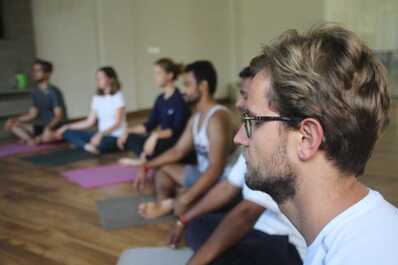
This fits into a normal training block: 5-8 minutes of each session, plus 10-15 minutes a day at home.
| Week | In session with you | Home practice | Check |
|---|---|---|---|
| 1 | Screen; teach nasal breathing & tongue posture; first round of mouth & throat exercises (10 reps) | Nasal breathing 3 x 3 min; one round of exercises; side sleeping; alcohol 3-4 hours before bed at most | Baseline breath-hold comfort, sleep diary, partner score |
| 2 | Add light breathing; nasal breathing in warm-ups | Light breathing 2 x 3 min; exercises 20 reps | Technique check; is the client doing it? |
| 3 | Add slow breathing & (if screened) the nose-clearing breath hold | Slow breathing in bed, on the side; exercises twice a day | Partner score; morning dry mouth? |
| 4 | Nasal breathing in easy cardio; review the whole routine | Keep everything; discuss nasal strips or mouth tape if appropriate | Compare with week 1; refer if no change or new red flags |
Then keep going. The research protocols ran for three months, & most people need regular practice to keep a new breathing habit.
Measuring progress without overclaiming
- Comfortable breath hold (BOLT-style): after a normal exhale through the nose, pinch the nose & time the seconds to the first definite urge to breathe, not a maximum. Measure at the same time of day. Treat it as a personal trend for breathing comfort, nothing more. A 2008 study found breath-hold time didn't predict carbon dioxide levels as Buteyko had claimed, so don't present it as a medical measure.
- Sleep diary: bedtime, wake time, alcohol, sleep position, morning dry mouth, energy levels & how rested they feel (sleep quality, 0-10).
- Partner report: snoring loudness 0-10, three mornings a week. A snore-recording app helps too.
- Training: the pace a client can walk or cycle with the mouth closed.
None of these diagnose anything. If the trend is flat after four weeks, or the partner reports pauses, refer.
Mouth tape, nasal strips & lifestyle: what to tell clients
Clients will ask about mouth taping. The honest answer: a 2025 systematic review in PLOS ONE found only 10 small studies, mixed results & potential risks for people with a blocked nose. Suggest it only for screened clients who can breathe comfortably through the nose for 20 minutes while awake, & send anyone with possible sleep apnoea to a doctor first. Neither is a reliable way to stop snoring on its own. Nasal strips may help a narrow nose. Our founder covers both in detail for the public in breathing exercises to stop snoring.
Healthy weight, alcohol & sleep position
Breathing exercises work best with the basics. Side sleeping helps many people snore less. Alcohol in the evening relaxes the throat muscles. And a healthy weight matters: in a large long-term study, a 10% weight loss predicted a 26% fall in sleep-disordered breathing events. That's where your training programme earns its keep.
Common mistakes coaches make
- Cueing big breaths. "Take a deep breath" through the mouth trains the habit we want to change.
- Straining breath holds. Maximum holds bring gasping recovery breaths & put off anxious clients. Keep air hunger mild.
- Skipping the screen. A client with untreated sleep apnoea doing breath holds & mouth tape is a risk, & outside your scope.
- Promising results. Say "may help" & track it.
- Too much, too soon. 30 minutes on day one becomes zero minutes by day four. Ten minutes of regular practice beats it.
- Energising breathwork at night. Fast, intense breathing styles before bed can leave a client wired. Save them, if at all, for the morning.

Breathwork training at ITI: becoming a breathwork instructor
If you want to coach this with confidence, & teach it to groups, structured breathwork training makes a difference. Many people come to breathwork for stress reduction, mental clarity, emotional health or their physical and mental health in general; breathing retraining for snoring is a narrower, more technical skill, & a good breathwork training program should teach both the techniques & where they stop. When you compare any breathwork teacher training program, look for: breathing physiology & the nervous system, safety screening & contraindications, practical teaching with feedback, an assessment of your teaching, & clear scope-of-practice guidance. Expert guidance on teaching style matters as much as the techniques.
BreathEra Recovery System instructor certification
Our BreathEra Recovery System 4-Day Instructor Certification Programme trains fitness professionals to deliver recovery & longevity-focused group classes. It's 2 days of guided online learning (including functional breathing patterns, nasal breathing & rhythm control, & autonomic nervous system basics) followed by 2 days of in-person practical training, with teaching practice & a certification assessment. It's open to personal trainers, group fitness instructors, strength & conditioning coaches & gym staff, & no prior breathwork teaching experience is required. Those who pass become a Certified BreathEra Recovery System Instructor.
BreathEra: Certified Breathing for Performance & Wellness (breathwork teacher training)
For a deeper understanding of breathwork techniques, the Certified Breathing for Performance & Wellness course is designed for health, fitness & wellness professionals, including personal trainers, physiotherapists, yoga instructors & healthcare practitioners. It's four levels of self-paced online study, from fundamentals to advanced theory & application; completing them certifies you. Optional in-person live sessions are announced twice a year for an additional, separate fee. It's a good fit if you want breathwork teacher training you can fit around work, & to bring breathing into your own practice at your own pace.
Prefer to start with a shorter experience? See our breathwork workshop in Singapore. Your clients in Singapore can also join a public BreathEra class at our sister studio, MSMC, whose guide on how to stop snoring is a useful handout.
Enquire about the BreathEra instructor certification
Tell us about your clients & your background, & we'll help you choose between the 4-day BreathEra Recovery System certification & the self-paced Certified Breathing for Performance & Wellness course.
FAQs
What are breathing retraining exercises?
They are simple, regular exercises that change how a person breathes every day: through the nose, more quietly & slowly, with good tongue posture. For snoring, they usually include nasal breathing, light breathing, slow breathing & mouth & throat exercises.
Can breathing exercises cure snoring?
Not reliably, but they may help some clients stop snoring or snore less. Mouth & throat exercises reduced measured snoring in small trials, & nasal breathing may help mild snoring, but snoring caused by sleep apnoea or nasal obstruction needs a doctor. Present exercises as "may help", never as a cure.
Who should not do breathwork?
Avoid breath holds & intense breathwork for people who are pregnant or have uncontrolled high blood pressure, heart disease, epilepsy, panic disorder or recent surgery, unless their doctor agrees. Anyone with suspected sleep apnoea should see a doctor first.
How long does breathing retraining take to work?
Plan for at least four weeks of daily practice before judging it. The snoring trials ran for about three months, & the new habit needs regular practice to stick.
How do you do Buteyko-style breathing?
Breathe gently through the nose & make each breath slightly smaller until you feel a light, comfortable air hunger, then hold that for a few minutes. Keep it relaxed; it should never feel like a struggle.
Can personal trainers teach breathing exercises to clients who snore?
Yes, within scope: screen for sleep apnoea red flags, refer when needed, coach the exercises as general breathing skills, avoid medical claims & record your referrals. Structured breathwork training helps you do this safely.
Is there online training for breathwork instructors?
Yes. ITI's Certified Breathing for Performance & Wellness course is four levels of self-paced online study, with optional live sessions twice a year for a separate fee. The BreathEra Recovery System certification combines 2 days online with 2 days in person.
Research we cite
- Ieto V et al. Effects of oropharyngeal exercises on snoring: a randomized trial. Chest, 2015. PubMed
- Guimarães KC et al. Effects of oropharyngeal exercises on patients with moderate obstructive sleep apnea syndrome. Am J Respir Crit Care Med, 2009. PubMed
- Camacho M et al. Myofunctional therapy to treat obstructive sleep apnea: a systematic review and meta-analysis. Sleep, 2015. PubMed
- Rhee J et al. Breaking social media fads and uncovering the safety and efficacy of mouth taping in patients with mouth breathing, sleep disordered breathing, or obstructive sleep apnea: a systematic review. PLOS ONE, 2025. PLOS ONE
- Puhan MA et al. Didgeridoo playing as alternative treatment for obstructive sleep apnoea syndrome: randomised controlled trial. BMJ, 2006. PubMed
- Fitzpatrick MF et al. Effect of nasal or oral breathing route on upper airway resistance during sleep. Eur Respir J, 2003. PubMed
- Chung F et al. STOP questionnaire: a tool to screen patients for obstructive sleep apnea. Anesthesiology, 2008. PubMed
- Courtney R, Cohen M. Investigating the claims of Konstantin Buteyko: the relationship of breath holding time to end tidal CO2. J Altern Complement Med, 2008. PubMed
- Zaccaro A et al. How breath-control can change your life: a systematic review on psycho-physiological correlates of slow breathing. Front Hum Neurosci, 2018. PubMed
- Peppard PE et al. Longitudinal study of moderate weight change and sleep-disordered breathing. JAMA, 2000. PubMed
This is the scientific research behind the article. PubMed is run by the US National Library of Medicine. This article is general education for professionals, not medical advice.